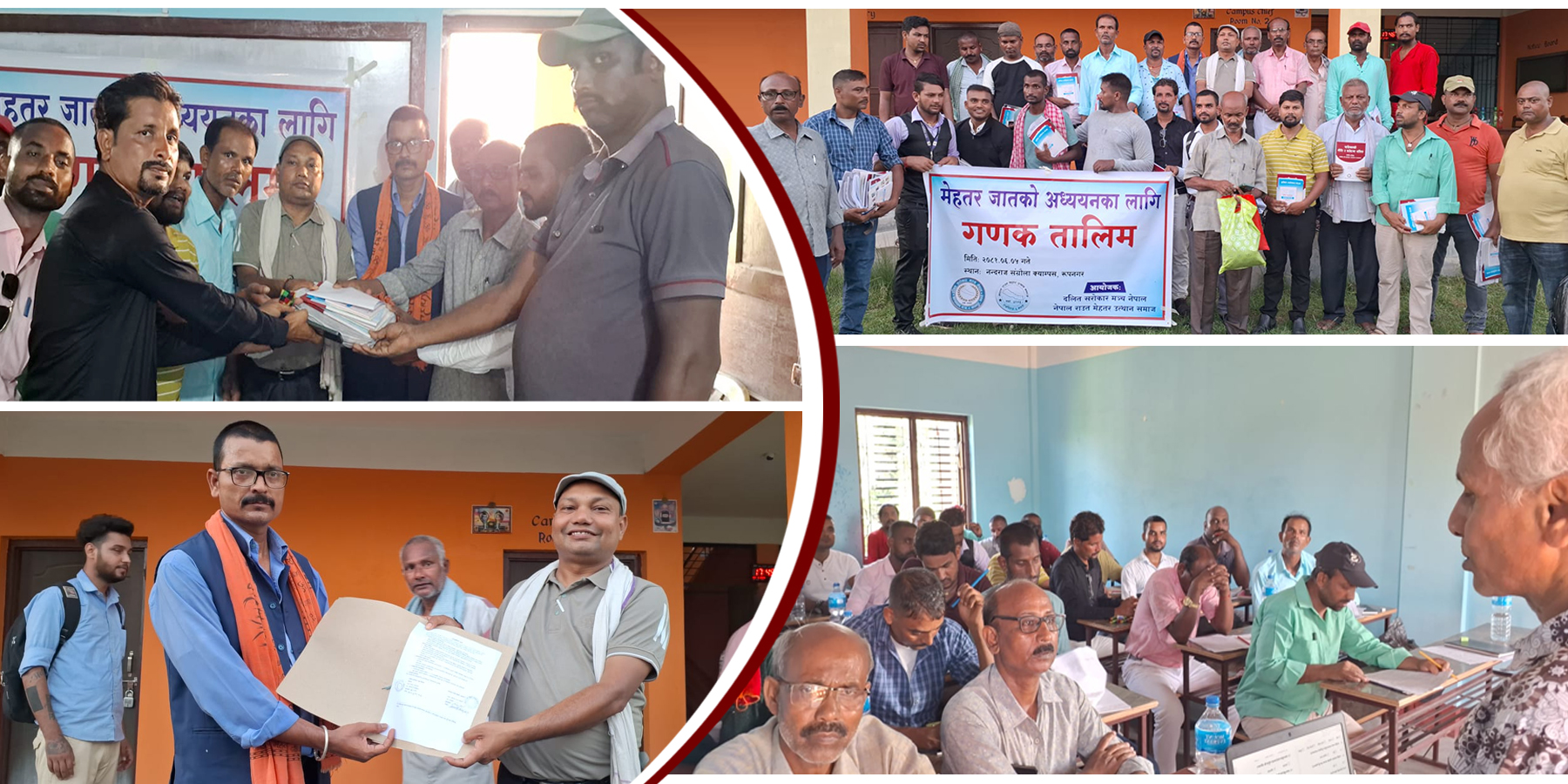
enumerators selected for the social prepared for the research of Mehatar Community
- 2024/09/24
Kanchanpur, Ashoj 5, 2081
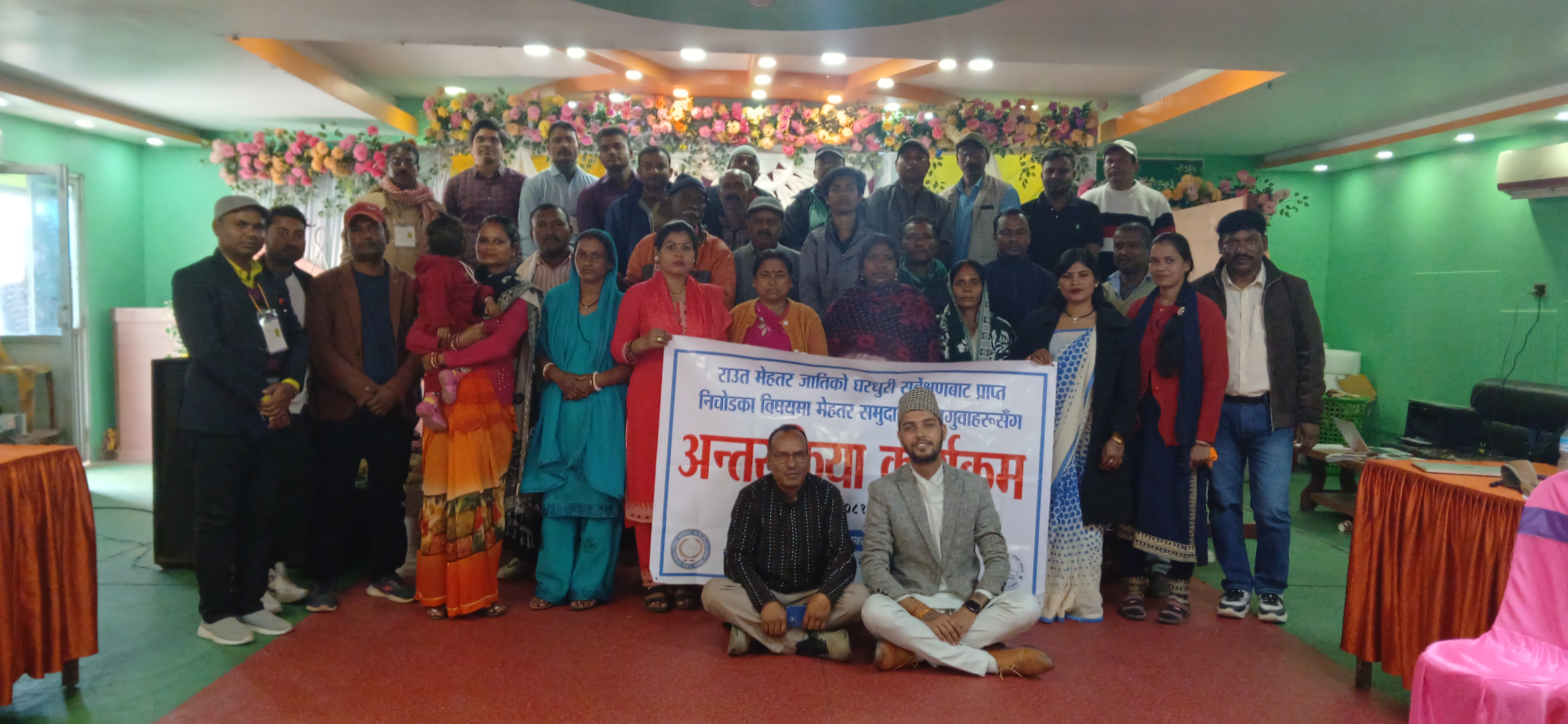
The enumerators selected for the social, economic, political, and cultural study of the Mehatar community were prepared for the research process through a special orientation program on Saturday. The program was held at Nandalal Sagraula Campus, Roopnagar.
The enumerators who participated in the program were given a detailed discussion about the Mehatar community based on more than 75 questions. These questions are based on various aspects such as the community's history, current situation, economic resources, social structure, education, health, and cultural lifestyle. The research team had the enumerators practice live to understand the meaning of these questions and to ensure the correct process of answer collection.
Each question was analyzed in depth by the participants present in the program. They were given hands-on practice on how to fill the questionnaire, how to communicate with the community, and how to deal with potential challenges that may arise during the research.
Enumerators from Morang, Sunsari, Saptari, Siraha, Dhanusha, Mahottari, Sarlahi, Rautahat, Bara, Parsa and other districts who came to participate in the orientation program participated enthusiastically, realizing the importance of this study.
During the training, the enumerators appreciated the opportunity to directly participate in the life of the Mehatar community and gain experience. The program familiarized them with the actual situation of the community as well as provided them with the necessary skills and techniques to collect factual information.
Keynote speakers' views:
Manoj Raut Mehatar, president of Nepal Raut Mehatar Utthan Samaj, said that the role of this research is important in revealing the real problems of the Mehatar community. He emphasized the need for data to bring community issues to the state's policy-making process.
Bhola Paswan, executive director of Dalit Sarokar Manch Nepal, gave detailed information to the enumerators about the purpose and importance of the research, pointing out the need to identify the historical contributions and problems of the Mehtar community. He said, "This research will lay an important foundation for community empowerment and protection of rights."
Khagendra Mehatar conducted the program successfully.
After the orientation, the research team announced the plan to fill the questionnaire by directly visiting the households of the Mehatar community in 10 districts. This historical study is expected to reveal the reality of the community and accurately depict their social, economic, and cultural conditions.
The results obtained from this study will contribute significantly to formulating an effective policy for the scavenger community.

.jpeg)